Heading to the Q’eswachaka Bridge is already a small adventure in itself. From Cusco, the journey takes several stages: four hours by public transport, changing in Combapata and then in Yanaoca, before finally reaching Quehue and, a little further on, the bridge. Prices are affordable—13 soles from Cusco to Combapata, 3.5 soles to Yanaoca, and between 10 and 60 soles for the final stretch, depending on whether you take a colectivo or a private vehicle. For those who prefer more comfort, it’s possible to arrange transport directly from Cusco, though prices vary.
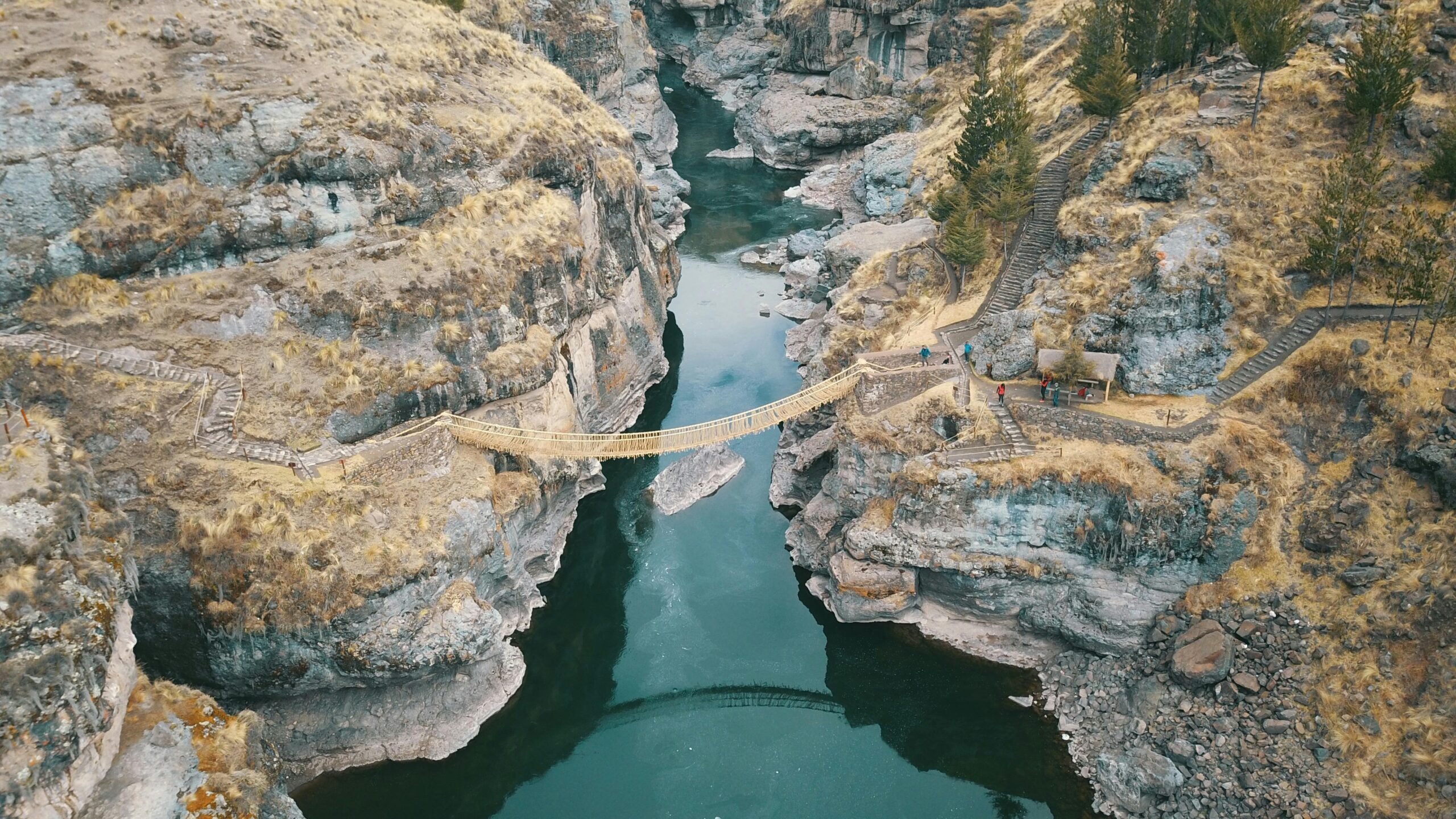
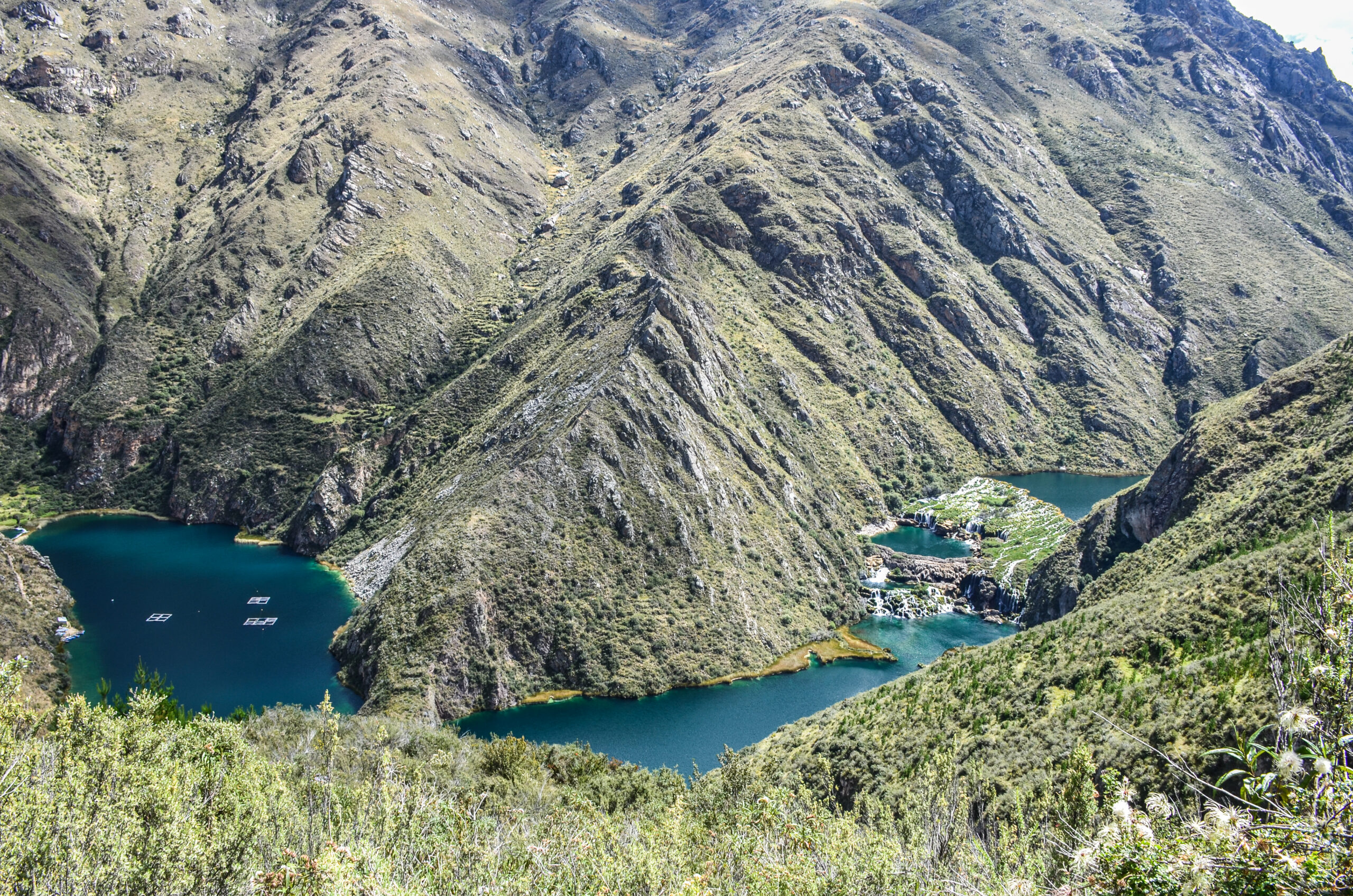
When you arrive in the region, the first impression is of a world apart. There’s no cell service here, unless you have a Claro phone. The mountains rise high, the Apurímac River winds through the bottom of its valley, and in the middle of this wild scenery, the Q’eswachaka Bridge connects two cliffs. It’s the last living Inca rope bridge in the world, rebuilt every year by local communities in keeping with a tradition more than five centuries old.
I chose to stay with Gregorio Huayhua, a warm host whose house is perched above, just three minutes by car from the bridge or a fifteen-minute walk downhill. The way back is more of a workout—about twenty-five minutes uphill. His home is simple but welcoming, with electricity, hot water (though the shower takes a bit of time to heat), and thick blankets to keep warm in the high-altitude cold. Double rooms cost 50 soles per person, and he also offers meals: breakfast for 10 soles, lunch for 15, and dinner for 10. The food is good, often simple but hearty—eggs, bread, ham, or traditional Andean dishes.
Gregorio offers more than just a roof: he also shares authentic experiences, such as fishing in the Apurímac River, milking cows, making cheese, or even demonstrating the full process of building a miniature rope bridge at his home.
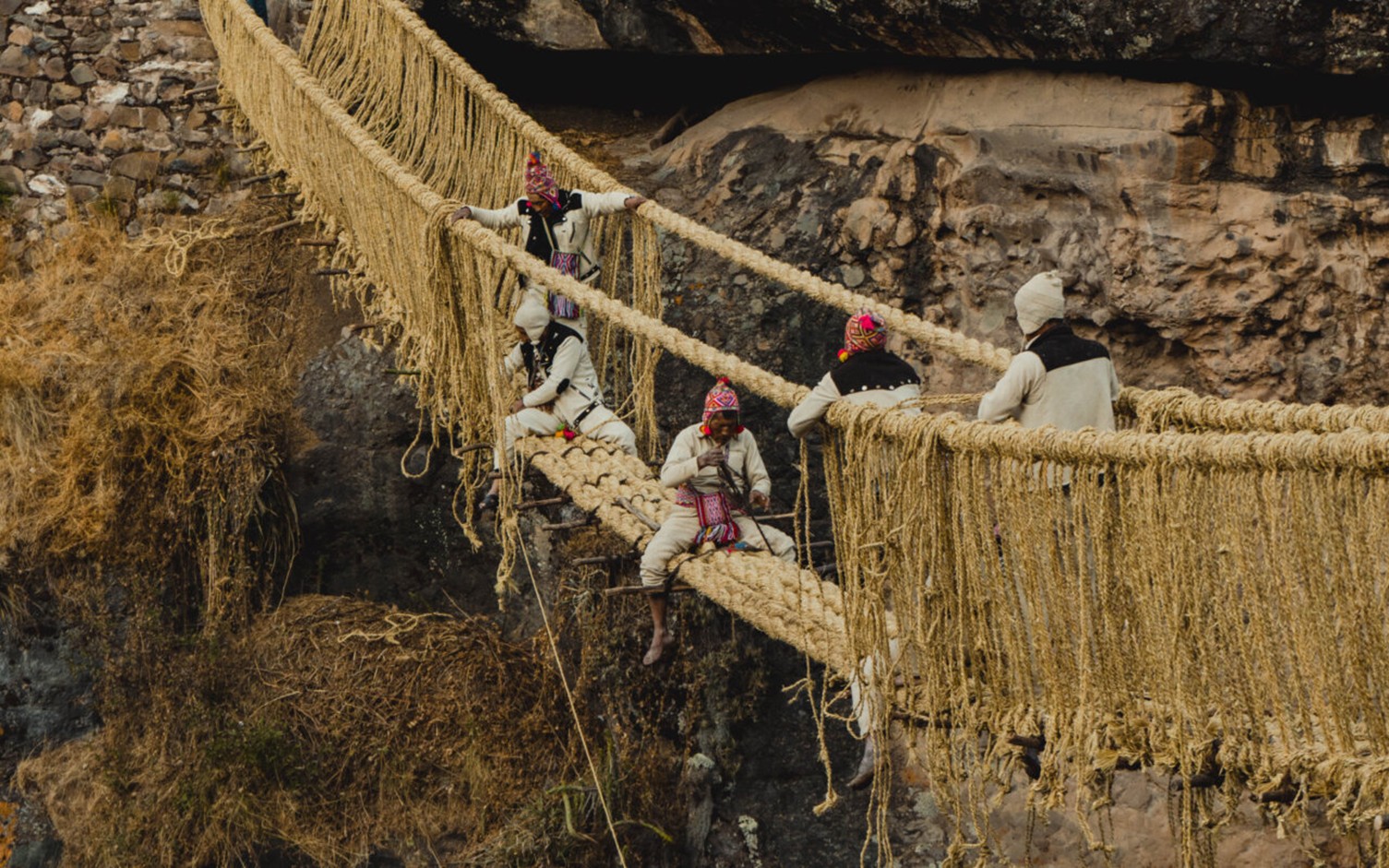
But if you come in June, it’s above all to witness the rebuilding of the Q’eswachaka. The atmosphere is incredible. For two days, the communities harvest and prepare qoya, the Andean grass used to weave the ropes. On Saturday, everyone comes together: the women braid the grass, the men assemble the bridge. Here, tradition says no woman can approach the bridge during construction, as it would bring bad luck. Only men from the surrounding communities are allowed to work on it. Foreign visitors can watch the work, but only if they wear a white and brown vest belonging to the community, available for rent or purchase.
That day, the energy reaches its peak. Shamans lead offerings to Pachamama, ask for your name, hand you coca leaves and cañaso—a strong, fermented alcohol—and invite you to blow on the leaves toward the Apus before placing them on the altar. If you wish, you can lend a hand pulling the ropes—an exhausting task that requires dozens of arms. At midday, everything pauses for an hour for lunch: you climb to the top of the hill, where small stalls offer fresh trout, cuy, chicken, pasta, and local potatoes.
In the evening, once the bridge is finished, the celebration begins. People drink, laugh, and dance, always near the bridge, while the offerings continue by firelight. The next day, Sunday, is dance competition day. Residents from surrounding villages take turns performing in traditional costumes, from the youngest to the oldest, in front of an enthusiastic audience. The event lasts until 4 or 5 p.m., and then, suddenly, everyone leaves. If you’re not staying overnight, you have to hurry to find a seat in a colectivo, which is often crowded.
Outside the reconstruction period, the bridge remains open to visitors. Crossing it costs 20 soles for foreigners (10 for locals) and is a unique experience: under your feet, the rope floor creaks slightly, the river roars far below, and the wind swirls around you.
To truly make the most of the experience, it’s best to plan two or three days in the area. The journey is long, but the hospitality of the locals, the beauty of the landscapes, and the emotion of walking on a living piece of Inca history make this trip unforgettable.