Peru is a country where every region tells a story, and this is especially true in the Cusco region, where unique remains can be found. Among them, Raqchi holds a special place. This archaeological site, less famous than Machu Picchu, offers a glimpse into Inca life and faith in a peaceful setting. Located in the San Pedro Valley, it is also known as the Temple of the god Viracocha.
A location chosen with purpose
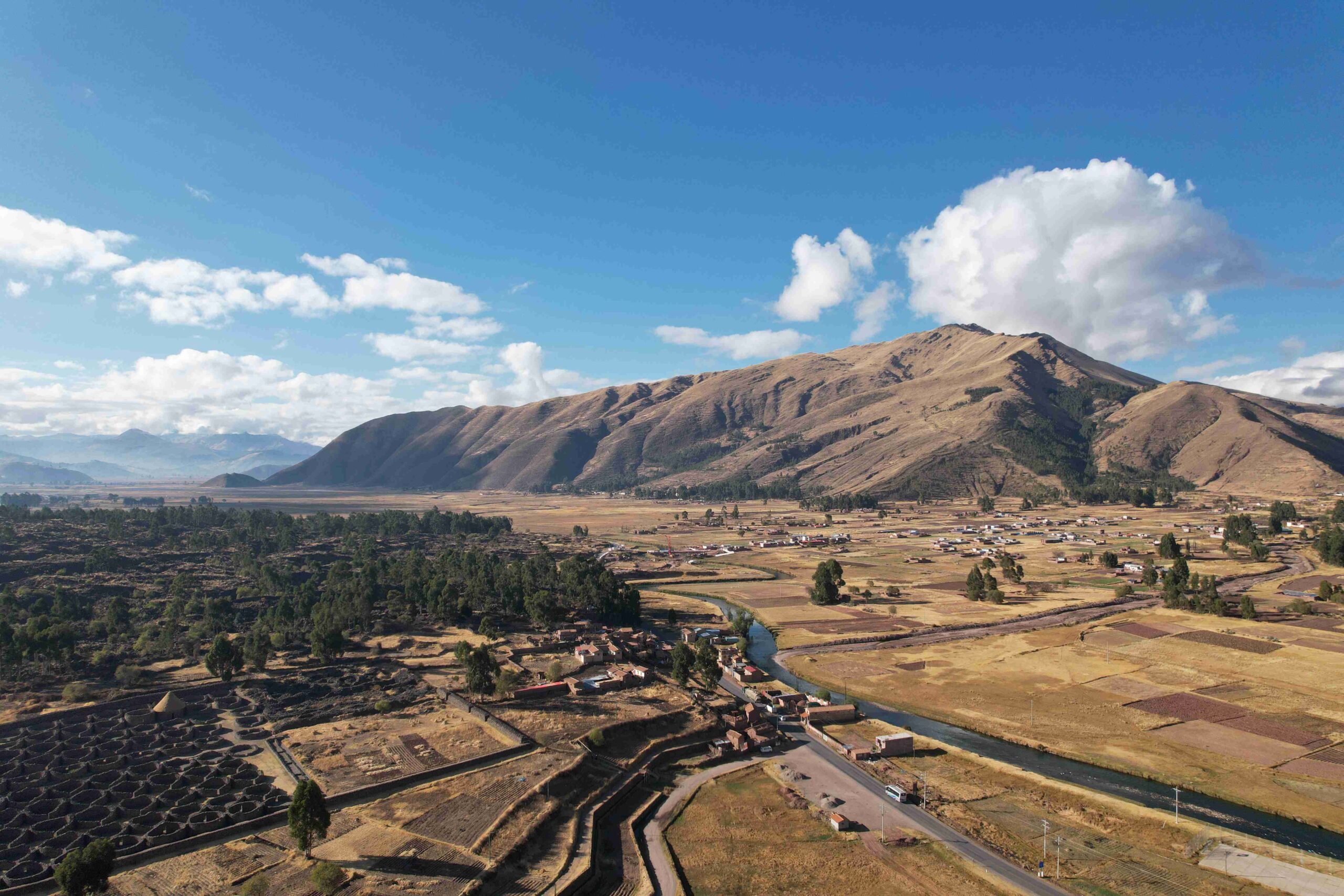
Raqchi lies about 120 kilometers southeast of Cusco, on the Ruta del Sol (Route of the Sun), which connects Cusco to Puno and stretches for 400 kilometers. This route was vital for the Inca Empire, linking the capital to Lake Titicaca while passing through many important sites, including Raqchi. As always, the Incas carefully chose their construction sites. Here, they could monitor trade, control the passage of travelers, and protect the region from potential attacks.
The origins of Raqchi
Archaeologists believe that Raqchi was built in the 15th century under Emperor Pachacutec, a key figure of the Inca Empire. The site served several purposes, the most important being religious. It housed a temple dedicated to Viracocha, a creator god revered throughout the Andean region.
According to Andean legend, Viracocha created the world, the sun, the moon, and the stars, and taught mankind how to live together. This spiritual significance explains the impressive size of the main temple.
However, Raqchi was not solely a religious center. There are also remains of granaries, houses, and farming areas, evidence that families lived and worked here year-round. This is particularly known thanks to the famous “colcas,” storage buildings used to keep food supplies.
Architecture and its features
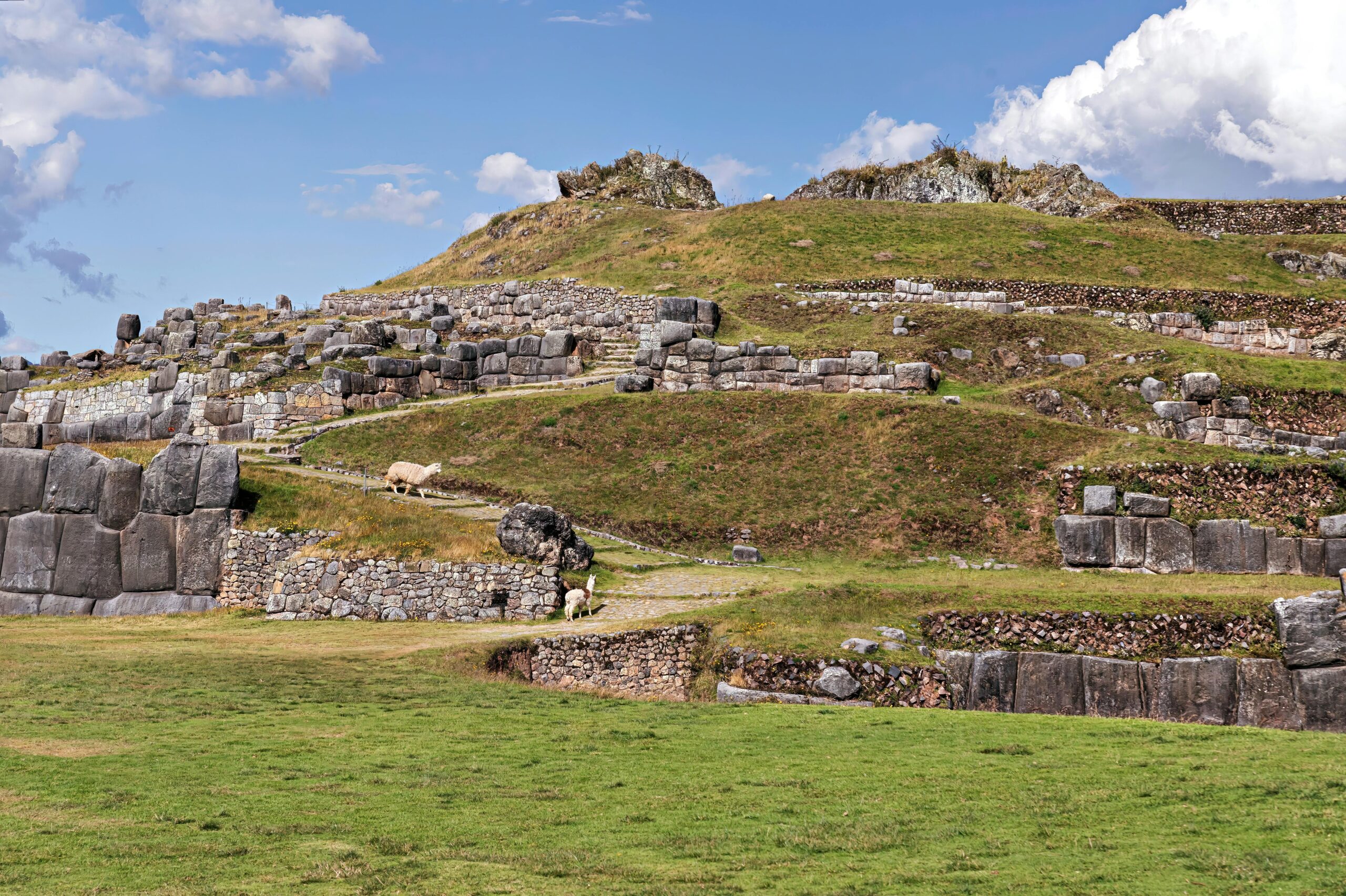
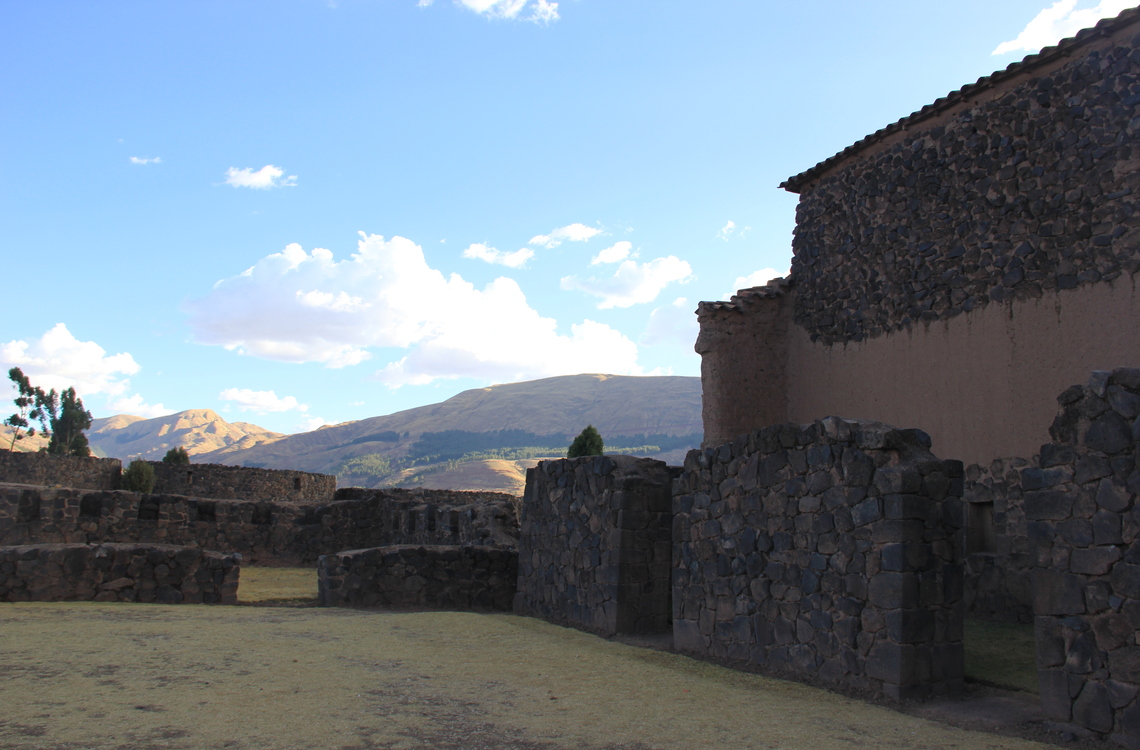
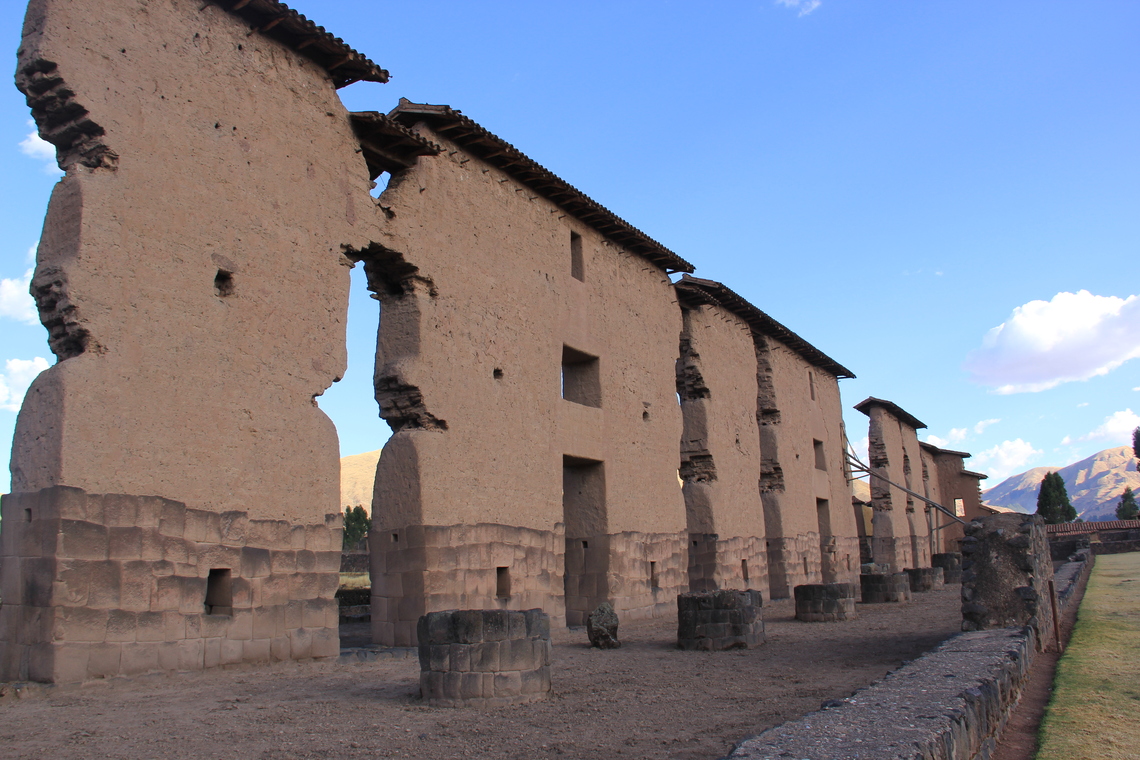
The main temple is the most impressive structure at the site. Its central wall is nearly 12 meters high and 92 meters long. It is built with stone at the base and adobe in the upper sections. This combination, both strong and economical, is typical in regions where stone is scarce or difficult to transport.
Around the temple, the colcas were used to store maize, potatoes, or quinoa. Their shape and conical roofs helped preserve the food.
The remains of the houses reveal a precise layout, with aligned streets and grouped dwellings, showing that Raqchi was not an improvised village but a planned Inca town.
An important religious center
The grandeur of the temple reflects the importance of the ceremonies held here. Worshippers sometimes came from far away to take part in rituals dedicated to Viracocha.
Archaeological excavations have uncovered offerings such as ceramics, metal objects, and food remains, proving that visitors brought gifts to seek the god’s protection or to give thanks for the harvests.
Priests were in charge of the ceremonies and the upkeep of the temple. They also had the role of teaching traditions and maintaining community cohesion.
Abandonment, rediscovery, and protection
After the Spanish conquest in the 16th century, Raqchi was gradually abandoned. Some of its stones were reused to build colonial structures, and weathering also contributed to the deterioration of the walls.
It was only in the 20th century that the site was studied more thoroughly. Archaeological research helped to better understand its role and layout. Today, Raqchi is protected and open to visitors.
Visiting Raqchi today
Most travelers visit Raqchi from Cusco. Entrance costs 20 soles, about 5 euros.
Walking through the ruins, visitors can observe architectural details, touch ancient stones, and imagine the life that once filled the site. Unlike more famous locations, Raqchi is rarely crowded, allowing for peace and quiet.
The village and its crafts
Next to the archaeological site, the modern village of Raqchi still relies on agriculture and crafts. Locals sell pottery, alpaca wool textiles, and regional products. Buying these souvenirs supports the local economy and lets visitors take a piece of the Andes home.
Conclusion :
Raqchi undoubtedly deserves a place on the list of must-see sites in Peru. Between nature and history, it offers an immersion into Andean culture and Inca ingenuity. Its strategic location, monumental temple, and well-preserved colcas make it an authentic and memorable stop.
As you leave, the image of that massive wall standing against the mountains remains in your mind, along with the stories and history the site carries.