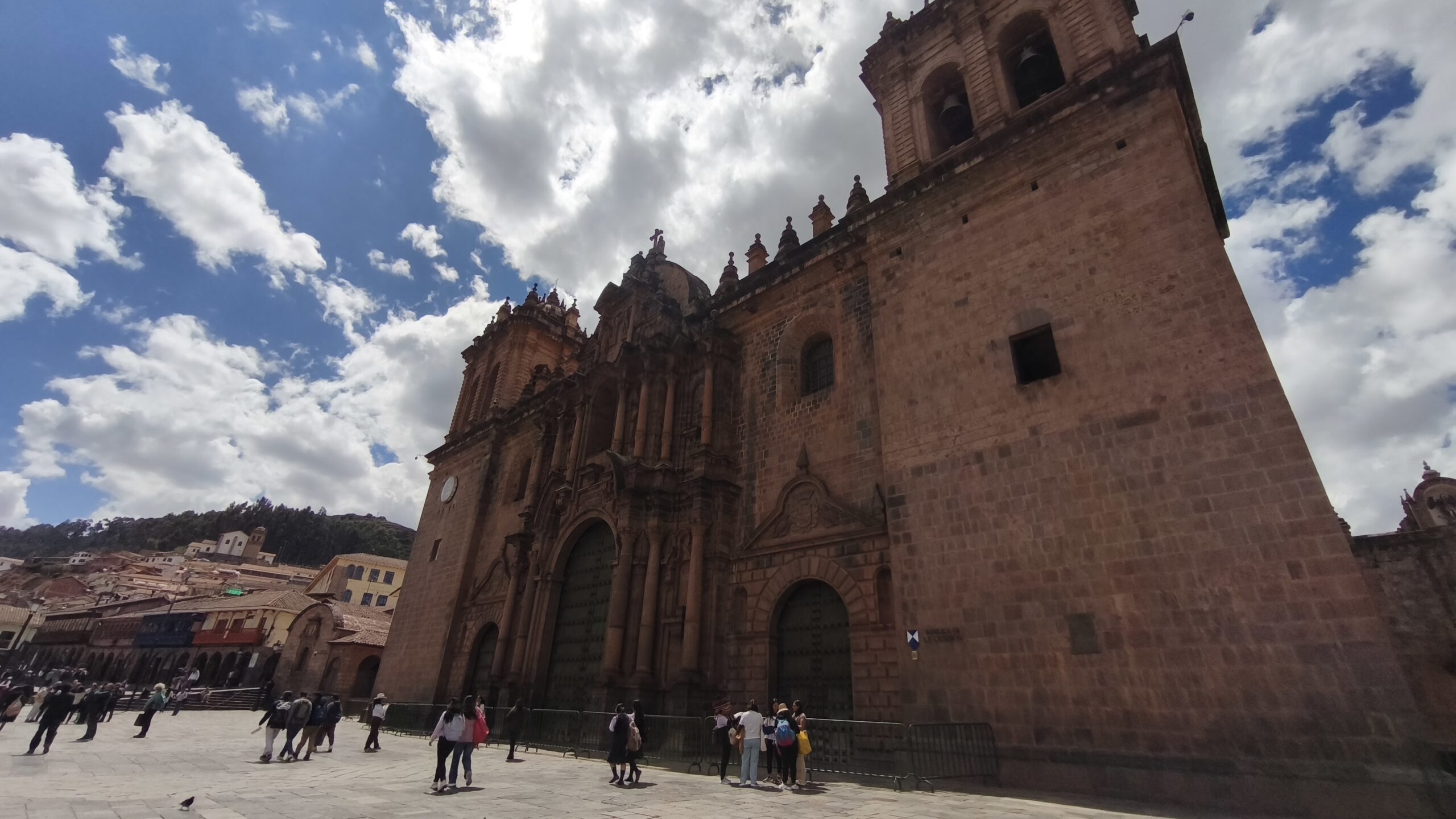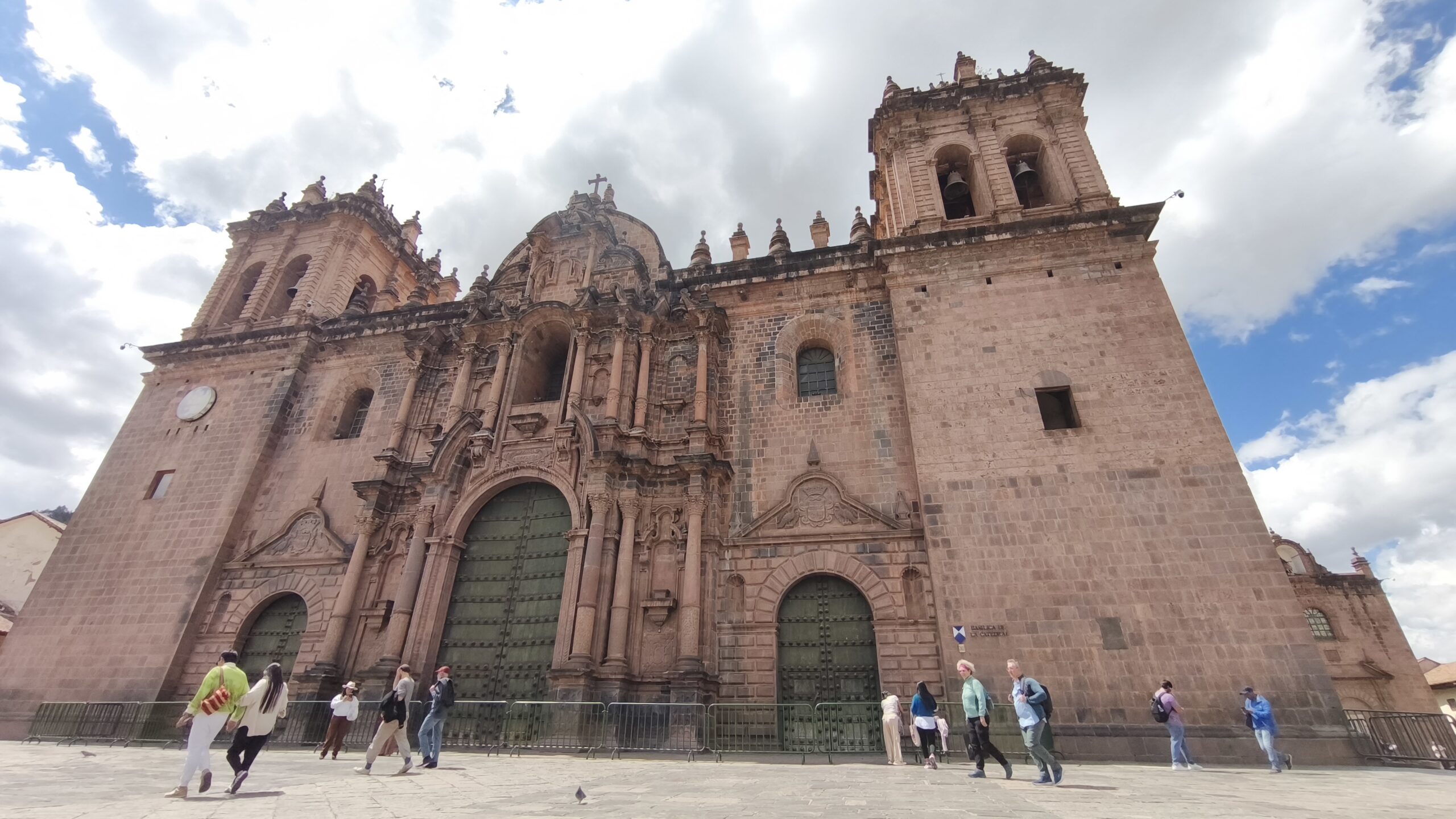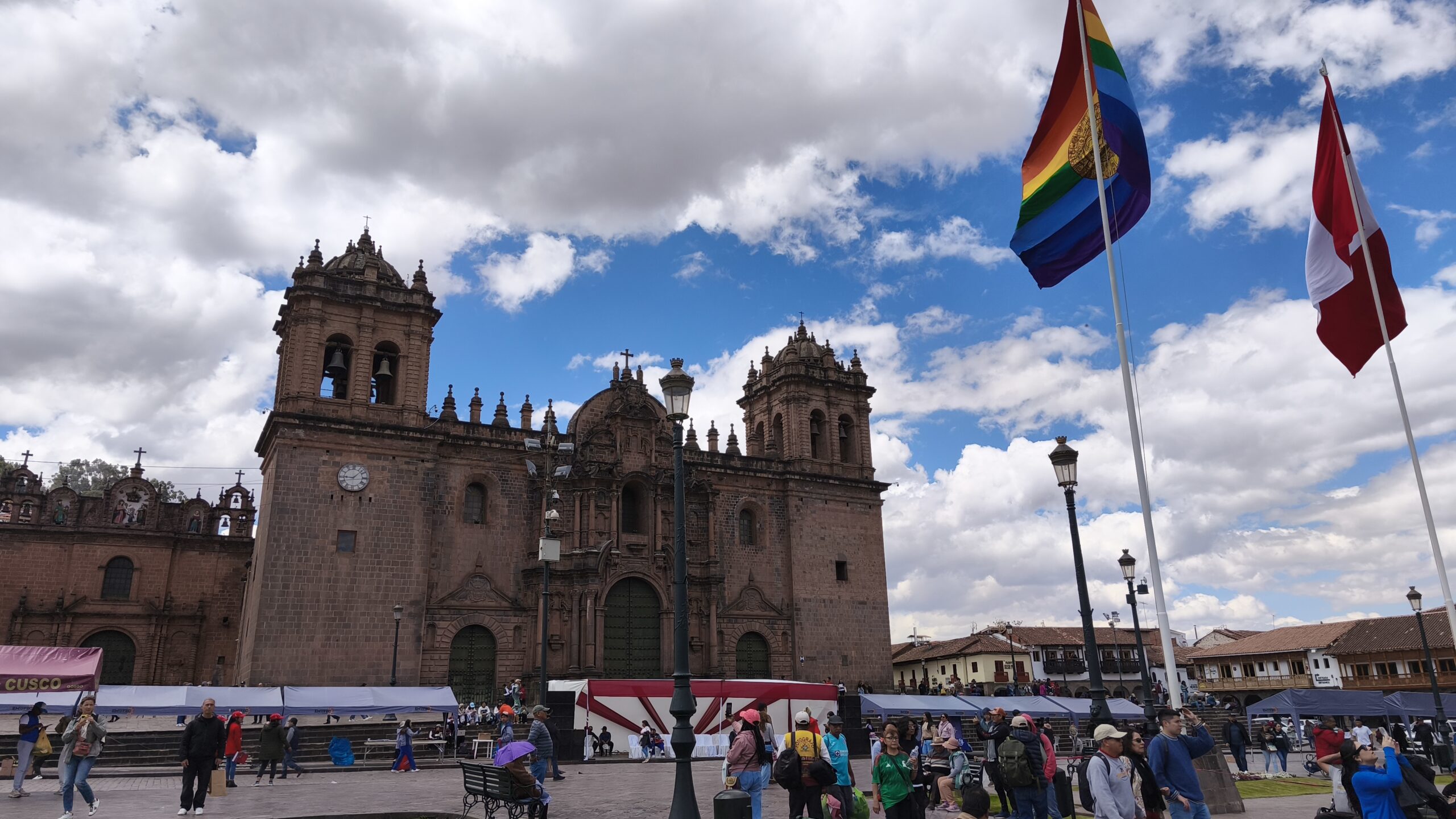
The Cathedral of Cusco is one of the most important monuments in Peru and in the city itself. It stands on the Plaza de Armas, in the historic center. Every day, hundreds of visitors come to admire it. It is at once a place of prayer, a museum, and a testimony to the history of the city and of Peru in general.
The cathedral is also a symbol of the meeting of two worlds. It represents the transition from the Inca Empire to Spanish rule. It is a fusion of European architecture with Andean influences.
A construction on an Inca site
The cathedral was built on top of an ancient Inca palace. This palace belonged to Viracocha, one of the empire’s rulers. The Spaniards chose this location to showcase their power and religion. It was a way to replace Inca symbols with their own buildings and to more easily convert the local population.
Construction began in 1559 and lasted nearly a century. The work took a long time because the materials came from distant quarries and the ground had to be reinforced. Many of the workers were Inca and Indigenous artisans who brought their skills.
An imposing architecture
The cathedral is a prime example of Spanish colonial architecture in Peru. It blends several styles: Gothic, Renaissance, and Baroque. The façade is made of finely carved stone with many details, giving an impression of strength and elegance.
The interior is equally impressive. It features large vaults, massive columns, and carefully decorated chapels. The light coming through the stained glass creates a solemn atmosphere.
Unique artistic treasures
The Cathedral of Cusco houses numerous works of art. There are sculptures, paintings, and altars covered in gold. Most were created by local artists during the colonial period.
Among the most famous are the paintings of the Cusco School, which combines European techniques with Andean elements. For example, in the depiction of the Last Supper, Jesus and his apostles are eating guinea pig, a typical dish from the Cusco region. Glasses of chicha, the traditional corn-based drink, are also visible.
The religious role
The cathedral is not only a historical monument but also an active place of worship. Residents of Cusco come here for Mass and other celebrations. Major religious festivals, such as Corpus Christi or Holy Week, are especially important.
During these events, the streets around the Plaza de Armas fill with processions, music, and dance. The cathedral becomes the spiritual heart of the city.
The stone and materials
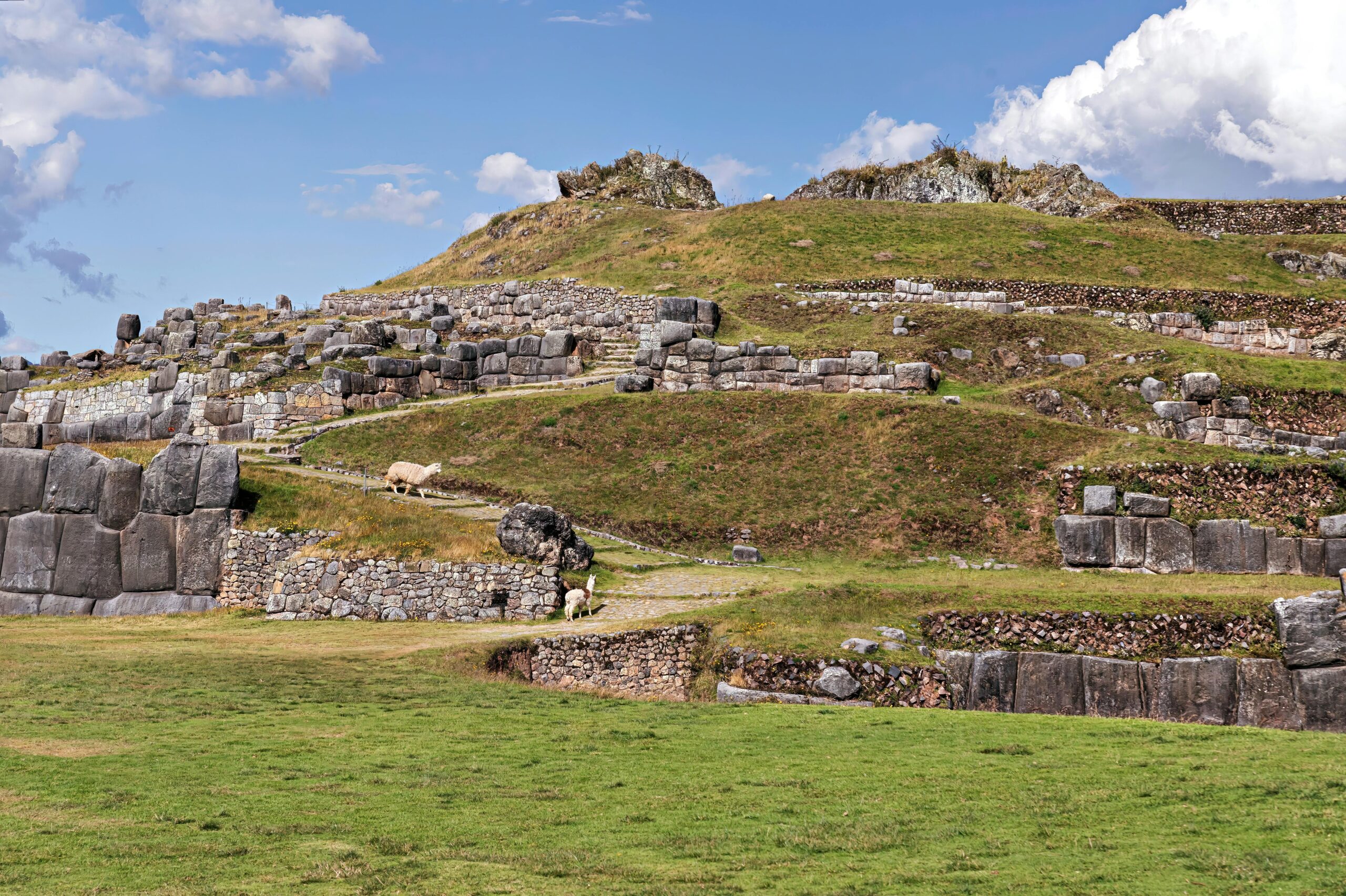
Most of the stones used to build the cathedral came from Sacsayhuamán, an Inca fortress located on the heights of Cusco. The Spaniards dismantled parts of the fortress to retrieve the blocks, which were then carved and reused in the construction.
Damage and restorations
Over the centuries, the cathedral has suffered several earthquakes. Cusco lies in a seismic zone, and these events have sometimes caused significant damage. Fortunately, the strength of its structure and restoration work have preserved the building.
Today, specialized teams monitor the condition of the monument, work to conserve its artworks, and reinforce its structure for the future.
A must-see visit
For travelers, visiting the cathedral is almost a must. It helps to understand the history of Cusco and to see Peruvian colonial art up close. Visits are often accompanied by a guide who explains architectural details and hidden meanings in the paintings.
Upon entering, it is advisable to take your time. Every chapel, painting, and sculpture tells a story. Here, the blend of cultures and beliefs can be deeply felt.
Practical tips and conclusion
The cathedral is open every day, but opening hours may vary. Visitors should wear appropriate clothing, as it is a religious site. Photography is sometimes prohibited inside to protect the artworks.
To better enjoy the visit, morning is the ideal time, as there are fewer people. Afterwards, you can enjoy the Plaza de Armas, surrounded by restaurants and shops, to rest and admire the façade from outside.
The Cathedral of Cusco is more than an old building. It is a witness to history, a religious center, and a place where art tells the story of the meeting of two worlds: the Andes and colonization.