Arequipa, nicknamed the Ciudad Blanca (White City) for the dazzling whiteness of its sillar stone buildings, is full of architectural treasures. But if there is one place that embodies the city’s history, spirituality, and aesthetic, it is undoubtedly the Santa Catalina Monastery. Behind its high, colorful walls lies a closed universe, both intimate and grand, where every stone seems steeped in centuries-old stories.
Entering Santa Catalina is like crossing an invisible border: you leave behind Arequipa’s lively rhythm to step into a labyrinth of silent streets, flower-filled courtyards, and brightly painted houses that seem frozen in time. The air feels different here, as though history and serenity blend together to envelop the visitor.
A Rich History, Shaped by Faith and Mystery
The monastery was founded in 1579 by María de Guzmán, a wealthy Spanish widow who donated her fortune to establish this Dominican convent. It quickly became one of the most prestigious in South America. Young women from the most influential Spanish families entered as teenagers, often spending their entire lives there.
Contrary to the austere image typically associated with religious orders, Santa Catalina had a unique characteristic: the nuns lived in small individual cells, sometimes lavishly decorated, and some even had the services of personal maids. This relative opulence fueled legends for centuries and stirred the curiosity of Arequipa’s inhabitants.
For nearly 400 years, the monastery remained completely closed to the outside world. It was only in 1970 that it opened to the public, following extensive restoration work. Since then, it has become one of Peru’s most visited sites—not only for its historical significance but also for its striking beauty.
A City Within a City
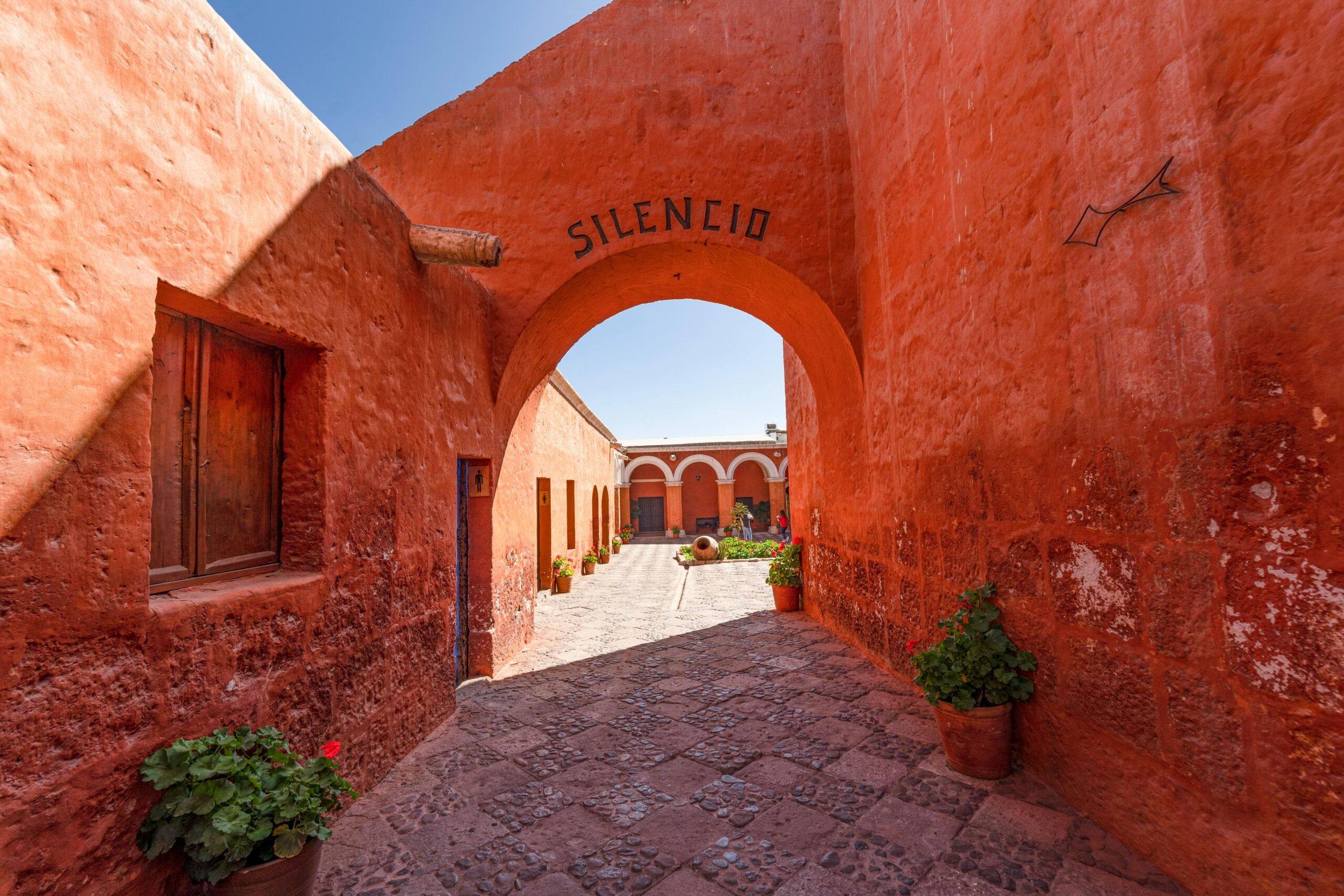
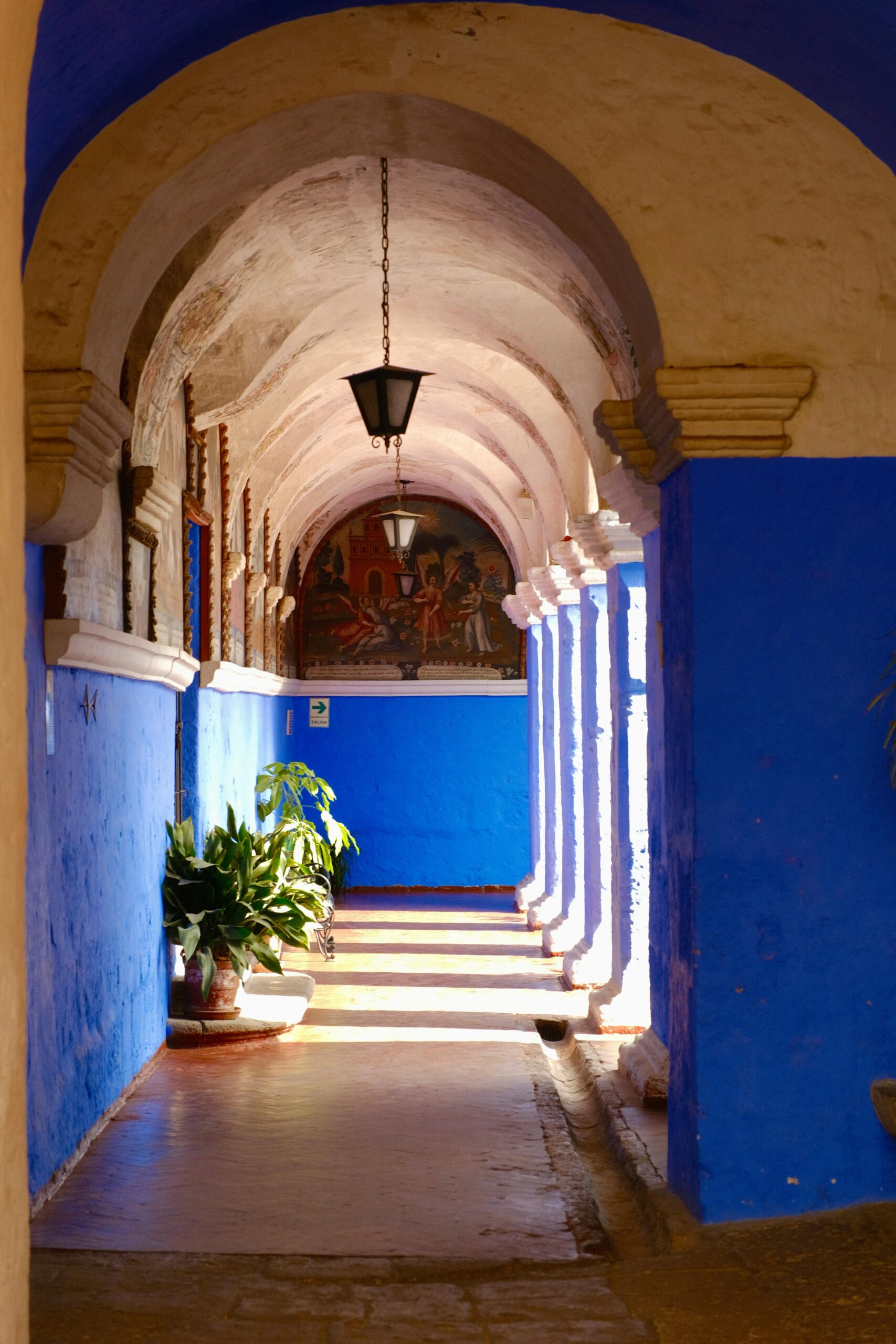
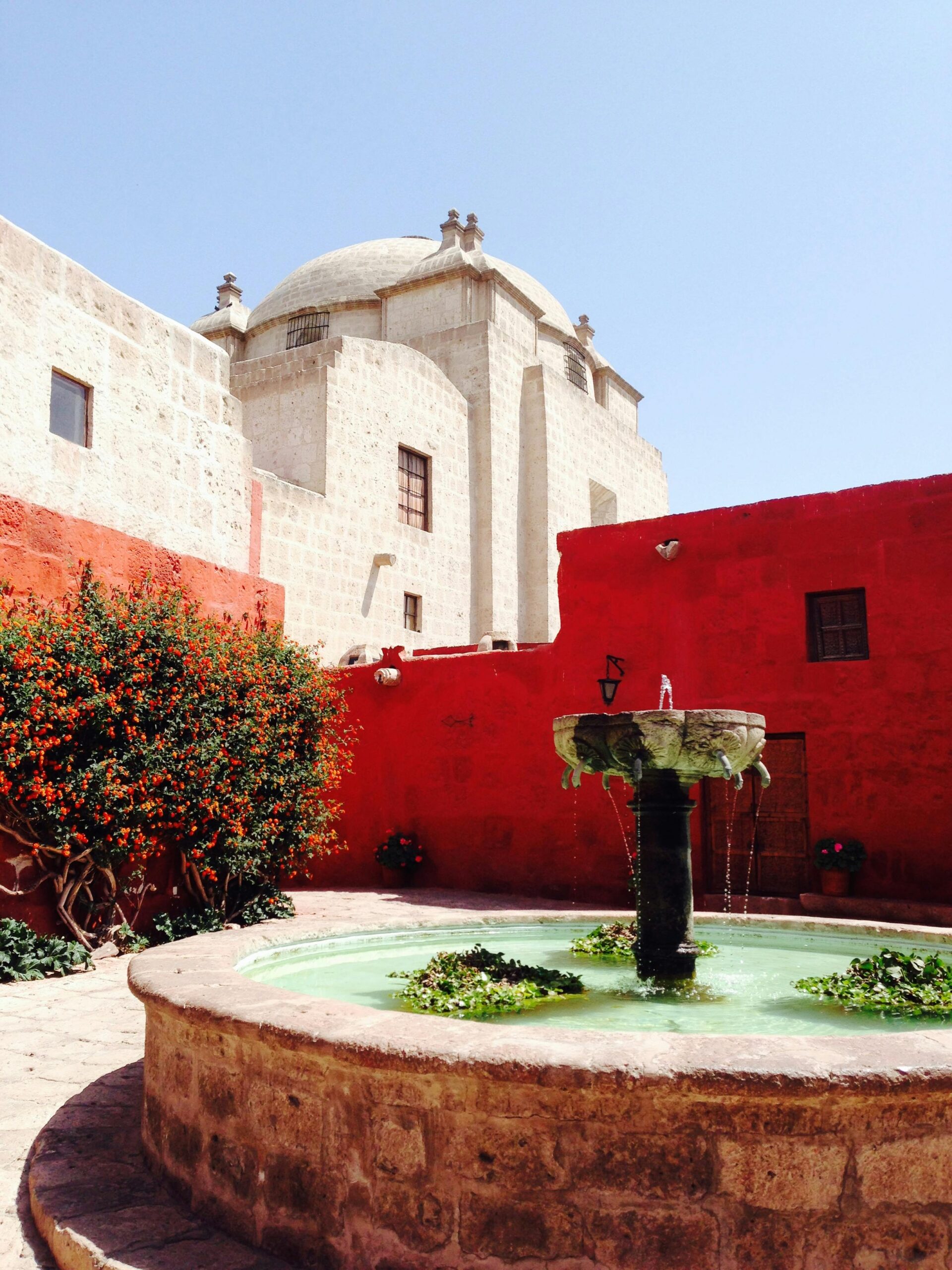
Covering 20,000 m², Santa Catalina feels more like a small neighborhood than a mere monastery. Its carefully maintained red, blue, and ocher walls create an almost theatrical backdrop. Every street, square, and cloister invites you to slow your pace and soak in the atmosphere.
Visitors can explore ancient kitchens with copper utensils, chapels adorned with sacred art, wash areas where nuns gathered, and small rooms that tell the story of entire lives spent in prayer and manual work. The street names—Calle Córdoba, Calle Granada, Calle Sevilla—recall the Spanish origins of its founders and add an almost Mediterranean touch to the walk.
The Magic of Colors and Light
One of the most striking aspects of Santa Catalina is the constant interplay between light and color. Arequipa’s often intense, pure sunlight reflects off the bright red and deep blue walls, creating contrasts worthy of a painting. In the courtyards, bougainvillea, geraniums, and jasmine add splashes of green and pink, while the cool shade of the arcades invites quiet reflection.
Each season and each hour of the day offer a different visual experience. In the morning, the light is soft, gently brushing the walls. At midday, colors turn vibrant and bold. In the late afternoon, as the sun sets behind the Misti, Chachani, and Pichu Pichu volcanoes, the tones grow warmer and the shadows lengthen, giving the place an almost surreal atmosphere.
A Place to Discover Slowly
To truly appreciate Santa Catalina, it’s best to take your time. The visit can last two to three hours if you want to see everything, but this is a place meant to be savored slowly. Sitting on a bench in one of the courtyards, listening to the silence broken only by the gentle sound of a fountain, or studying the details of an old fresco—this too is part of visiting Santa Catalina.
If you’re into photography, it’s a true visual paradise. The perspectives offered by the narrow streets, the interplay of shadows and light, and the rich textures make every corner a potential shot.
Tips for Your Visit
Opening Hours: Generally open daily from 9:00 a.m. to 6:00 p.m. On certain evenings, candlelit night tours are offered, creating a truly unique atmosphere.
Entrance Fee: Around 40 soles per adult, with discounts for students.
Best Time to Visit: If possible, come in the late afternoon to enjoy the golden light.
Duration: Plan for at least two hours, longer if you like to linger over details or take photos.
Languages: Guided tours are available in Spanish and English, ideal for understanding the monastery’s history and anecdotes.
Extend the Experience
After your visit, continue exploring Arequipa’s historic center, a UNESCO World Heritage Site. Just a few minutes away on foot, the Plaza de Armas will charm you with its elegant arcades and majestic cathedral. For a sweet break, sit on a terrace with a view and try the famous queso helado, a local frozen specialty.
A Must-See in Arequipa
The Santa Catalina Monastery is not just a place to visit—it’s an experience to live. Here you can feel the power of history, the influence of spirituality, and the elegance of Peruvian colonial architecture. It’s a space that invites both contemplation and curiosity, where every corner tells a story and time seems to stand still.
For travelers seeking to understand the soul of Arequipa, Santa Catalina is an essential stop.