Just a few kilometers from Cusco’s historic center, perched on the hills overlooking the valley, lies a place that intrigues and fascinates: the Qenqo archaeological complex. Less famous than Sacsayhuamán or Tambomachay, this Inca site has a unique, almost mystical atmosphere. Here, stones tell stories of rituals, astronomy, and sacred symbols, immersing visitors in the heart of Andean beliefs.
A name inspired by nature’s shapes
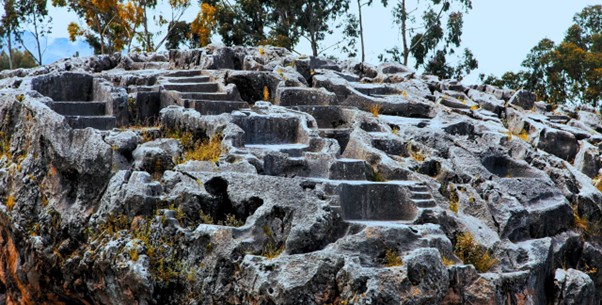
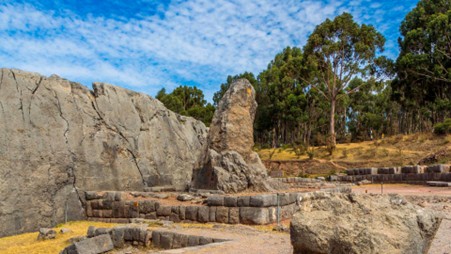
The word Qenqo comes from Quechua and means “labyrinth” or “zigzag.” It refers to the numerous galleries, crevices, and carved channels found throughout the site. At its center stands an imposing block of limestone, shaped by human hands, which seems to have served as a religious sanctuary, astronomical observatory, and place for ritual sacrifices.
The site, likely dating back to the 15th century, is thought to have been built during the reign of Inca Pachacutec, a key figure in the empire’s expansion. As in much of Inca architecture, stone and nature blend harmoniously here, creating a monumental yet discreet whole, perfectly integrated into the surrounding landscape.
A ritual center in the heart of the Andes
Archaeologists agree that Qenqo was an important ceremonial hub. Among its most remarkable features are:
The amphitheater: a semicircular esplanade surrounded by niches, possibly used to place offerings or display mummies during ceremonies.
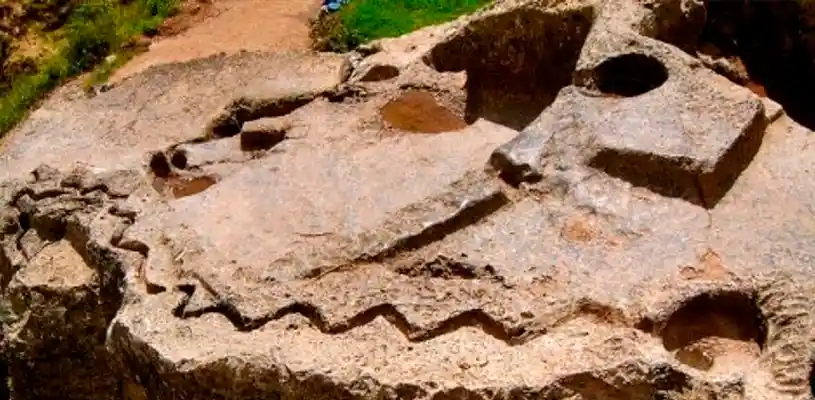
The main rock: precisely carved, it features zigzag-shaped channels that may have been used to carry liquids—water, chicha, or perhaps blood during sacrifices.
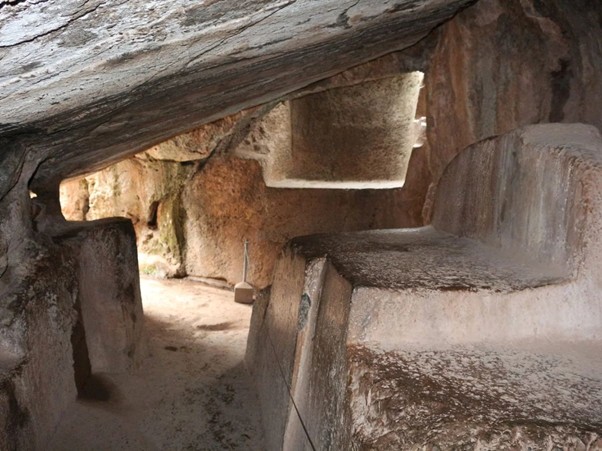
The underground galleries: narrow passages carved into the rock lead to mysterious chambers, often linked to funerary rituals.
The Intihuatana: a monolith believed to have been used to track time according to the movement of the sun, showcasing the Incas’ advanced astronomical knowledge.
Together, these elements reveal a place deeply connected to nature worship, solar and lunar cycles, and the spiritual practices of the era.
A sacred bond with nature
For the Incas, nature was not just an environment—it was a living being with which they maintained a harmonious relationship. Qenqo perfectly reflects this vision. The carefully worked stones preserve their natural shapes while incorporating human-made features. The carved channels seem to extend the rock’s natural lines, as if amplifying its energy.
Andean beliefs associated every element of nature—mountains, rivers, rocks—with a protective spirit known as an apu. Qenqo, standing high above Cusco, would have been a privileged place to connect with these spiritual forces and honor them.
A site wrapped in history and mystery
Like many sacred Inca sites, Qenqo keeps part of its story hidden. Spanish chroniclers left few precise descriptions, and even archaeologists disagree on the exact purpose of its structures. Was it an astronomical observatory? A sacrificial altar? A sanctuary dedicated to Pachamama?
This lack of certainty only adds to the site’s magic. While visiting, it’s easy to imagine religious processions, chanting, offerings, and the warm glow of sunset bathing the stones.
Tips for your visit
Location: Qenqo is located about 4 km from Cusco’s center, on the way to Sacsayhuamán and Puca Pucara.
Access: reachable by taxi, on foot from Sacsayhuamán, or as part of the Cusco Archaeological Circuit included in the Boleto Turístico.
Duration: 30 minutes to 1 hour; longer if you want to explore details or take photos.
Best time to visit: early morning or late afternoon, when the light enhances the rock’s reliefs and there are fewer visitors.
Guided tour recommended: a guide’s insights are invaluable for fully understanding the site’s symbolism.
Extend your journey
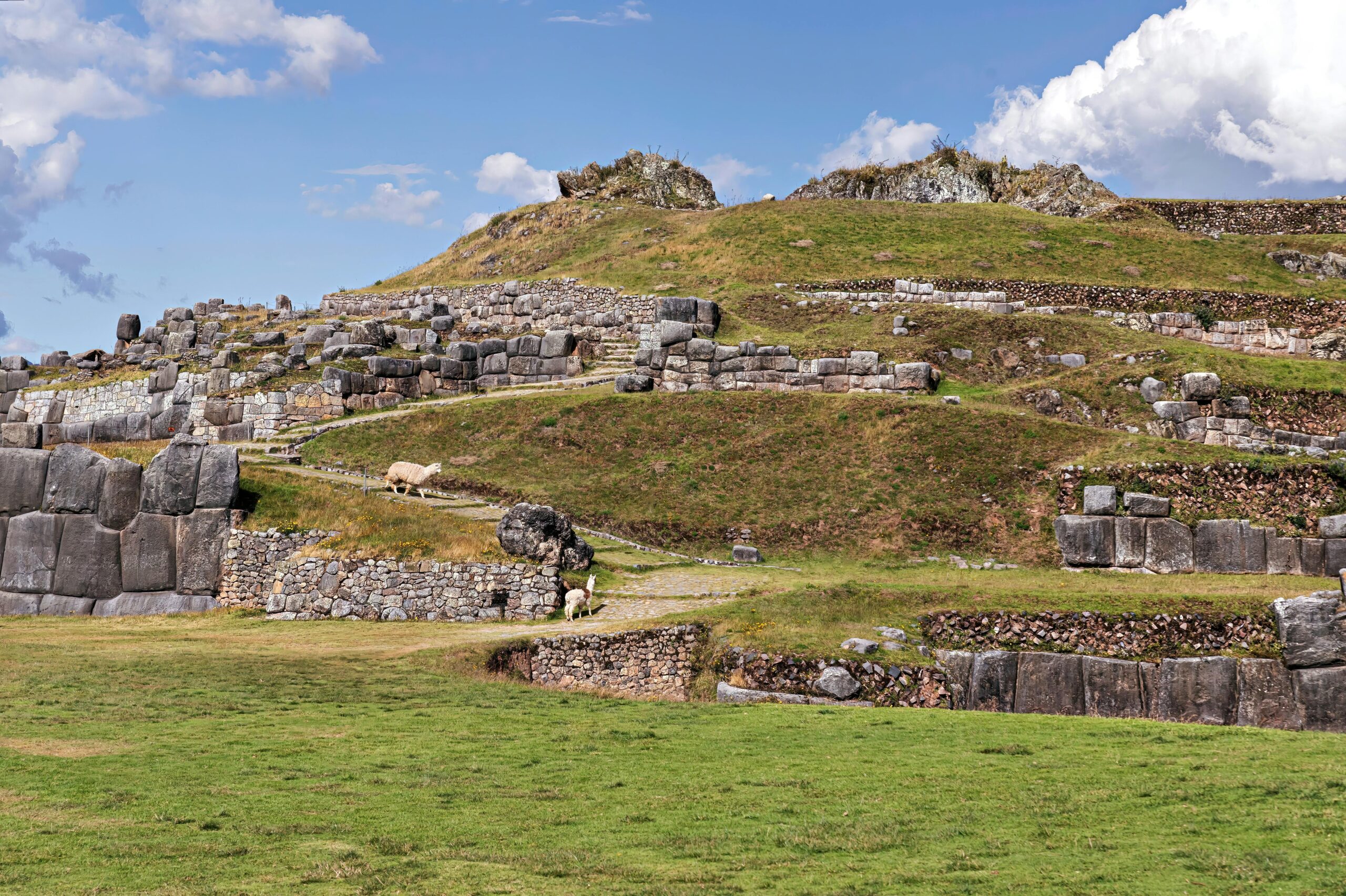
Qenqo is often included in a circuit with other nearby archaeological sites: Sacsayhuamán, the impressive Inca fortress; Puca Pucara, a military checkpoint; and Tambomachay, dedicated to water worship. Together, they offer a fascinating route into the grandeur of the Inca Empire.
A place that speaks to the heart and imagination
Visiting Qenqo is about letting yourself be carried away by its atmosphere, even without all the answers. It’s walking on stones once trodden by Inca priests more than five centuries ago, feeling the Andean wind on your face, and contemplating a landscape that ancient civilizations considered sacred.
Qenqo may not be the largest or most imposing site in the region, but it holds a special intensity. It’s a place where history and spirituality meet—where stone and sky seem to share the same breath.